
Having a ready 3D model still requires preparation for printing, which is what a slicer is for. My first test prints were done using Creality Slicer, but I quickly switched to Ultimaker Cura.
A major decision was choosing the filament. The basic version of Creality (without tent/enclosure) limited me to PLA and PETG. PLA is environmentally friendly (polylactide is generally obtained from corn flour) and easy to print. Unfortunately, it has low resistance to environmental influences and low temperature resistance. Attempts at sanding immediately melt the material. PETG, on the other hand, is difficult to paint.
The initial idea was to use white PLA or PETG directly without any finishing. However, visible print imperfections, including visible printing lines, and the not quite matching color, forced the option of finishing.
Ultimately, the choice fell on PLA. Painting should solve the moisture resistance issues, and the fact that the elements are white solves the temperature problem (black PLA exposed to the sun softens!). After a few attempts, the satisfactory final effect was achieved with:
- Coating the print with a layer of epoxy primer.
I used an epoxy primer spray, which is used in bodywork repairs. I used a local product, BOLL Epoxy Primer, but any similar product will do the job. - Sanding.
I used foam paper with a grit of 200 and higher. - Painting.
The print was painted with base automotive acrylic (as white was to be achieved) using a paint gun. The paint was purchased from a supplier supplying bodywork workshops.
All prints used a 0.4mm nozzle and the default Cura profile for PLA: 0.12mm for final prints and 0.28 for draft with 20% infill. I used Spectrum PLA Pro Arctic White filament.

Prints
Each frame was first printed in draft mode to ensure the prints fit well. In the draft version, some parts of the prints were “welded” using a 3D pen.

The final print was glued with epoxy and underpinned at the joints. The prints were made “face down” to ensure a flat front surface with maximally limited 3D printing traces.

There was some work with sanding, polishing, and painting, but the final effect is rewarding. Now, more than 4 years later, the prints look the same as on the first day.
- apply thing layer of expoxy for priming; the epoxy priming for car reapirs were used; is used local procuct BOLL epoxy primer but anything simillar will be good.
- such layer can be then saned to achive a smooth ayer
- final print was painted with acrylic car paint.
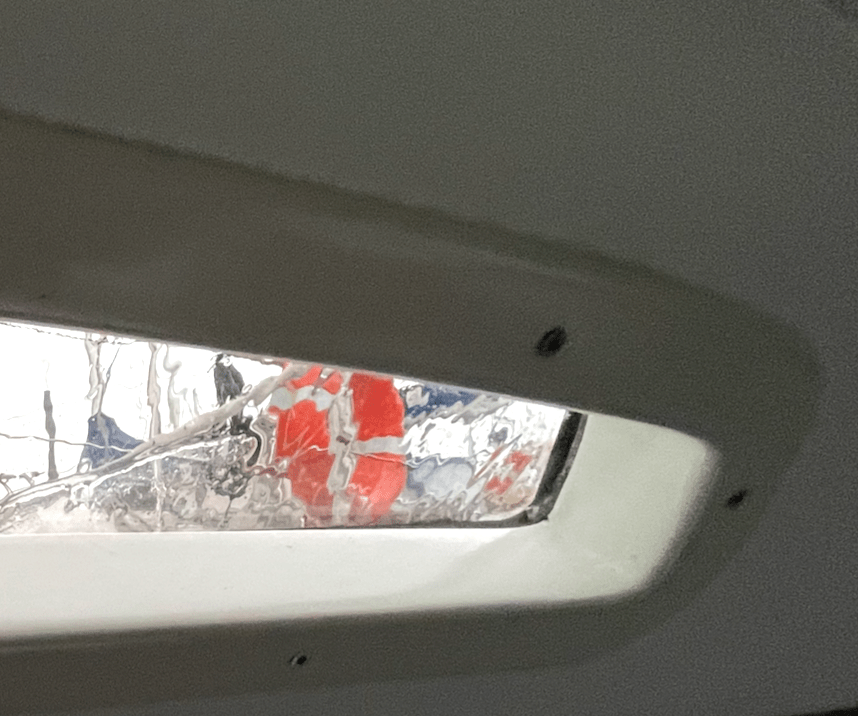
An unpleasant surprise at the end
Having finished the first frame for one side, I thought it would be enough to make a mirror copy for the other side. Unfortunately…
Bostrom B31 was purchased by future owners in a DIY version. The company supplied the hull, while the equipment was done on their own. As a result, there are no two identical B31s. Since the finishing, including window openings, was not done at the shipyard, the cutouts are not exactly the same either. In the photos below, you can notice slight differences in the corner shapes and dimensions.

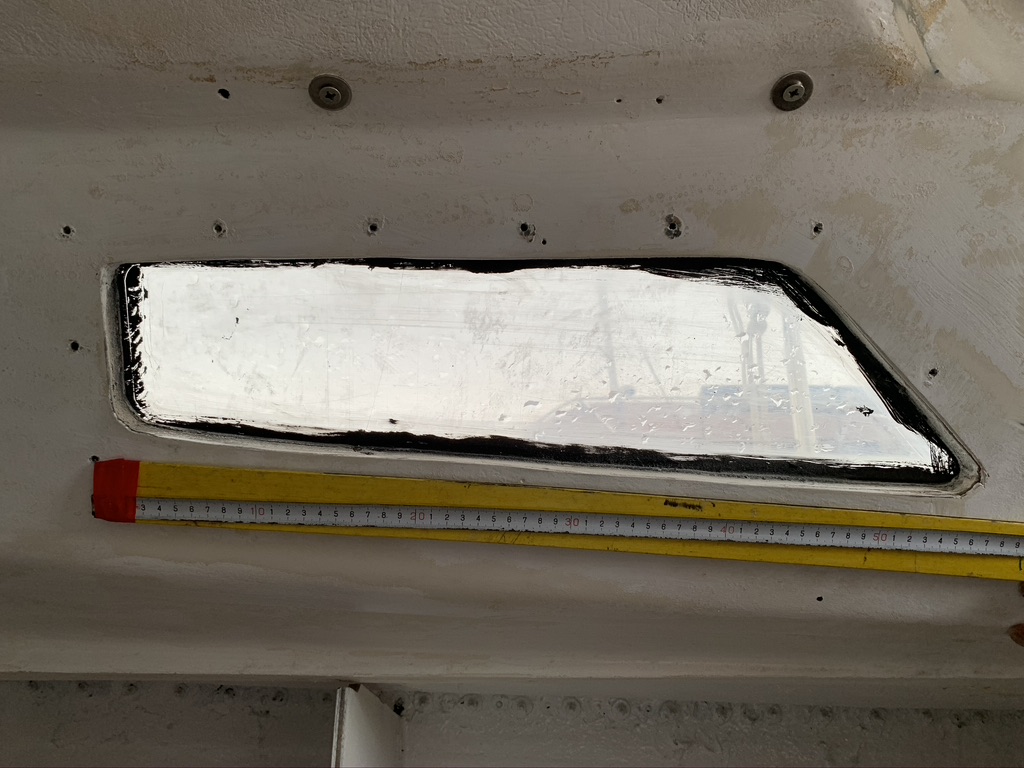
I had to go back to the drawing board and design the windows separately for the other side. Practice makes perfect, so this time it went smoothly.
 s/y Growler
Leave a comment